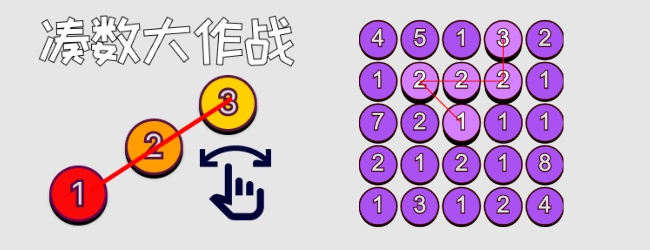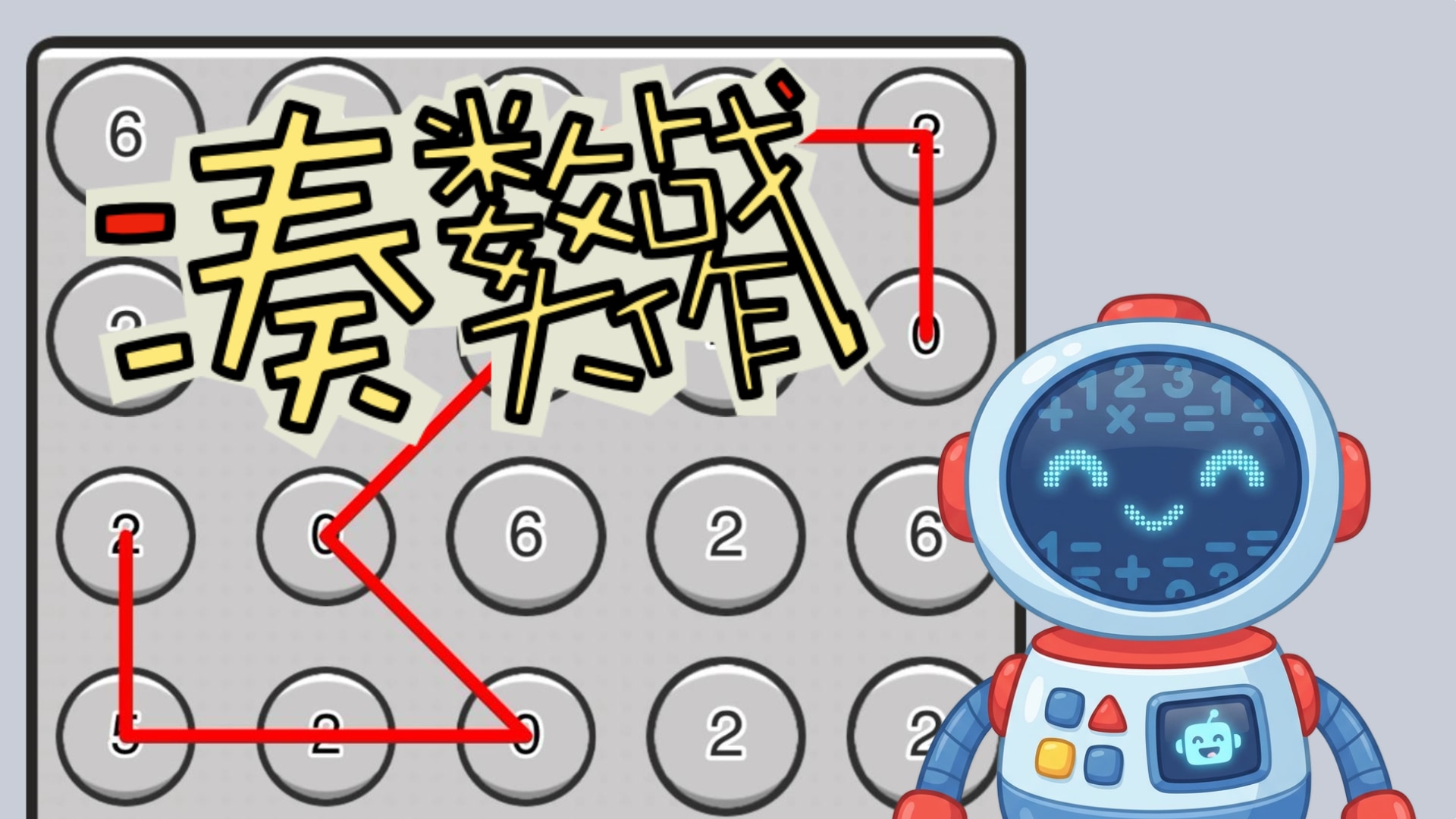
Math Match was the first project I tried after my last layoff. It started with Duolingo math sessions with my daughter. One of the mini-games worked exactly like what became Math Match. Watching her play and learn, I felt the urge to try it myself — I wanted to know how many points an adult could score in a minute. I looked around online and found nothing quite like it. It seemed like a fairly unusual niche.
My first plan was a WeChat mini game. I studied WeChat’s built-in framework and got the basic gameplay working. Then I hit a wall: animation was hard to do well; I was stuck with crude options, and development felt painful. So I started over and learned Cocos Creator — a game engine widely used for mini games in China, with solid export and platform adapters.
With AI-assisted learning I got productive in Cocos quickly. It uses TypeScript, the same language I already used for front-end work. I rebuilt the game in Cocos, applied to publish on WeChat, filled in materials, polished the home screen, settings, sound, and so on, and finally shipped.
WeChat mini games do not require a software copyright certificate (Douyin and some other platforms do), but you still wait for WeChat review and ICP approval — each can take one or two weeks.
After launch I posted the link on Moments. To my surprise, a few former colleagues noticed, tried it, and left suggestions. Organic traffic, though, was poor: a dozen users I had pulled in myself, then a trickle of strangers. From what I gather, WeChat mini games usually need paid user acquisition — ads.
I kept focusing on the product itself. I was still new to Cocos and to mini-game development, so I watched other games while iterating on mine.
The person who encouraged me most was my grandmother, in her nineties. Back home she has an iPad and a Xiaomi tablet I bought her. She already played WeChat idiom games. I recommended mine, expecting little interest — or that she would not get it. A few days later my aunt told me Grandma was hooked. She mainly played my game and that idiom title, which, for the record, is a long-running product from a professional studio.
My daughter encouraged me too. She still comes by to practice arithmetic. Whenever I doubt the work, she says it is fine, it is fun, and pushes me to keep going. I know children have seen less of the world, so almost everything can feel good to them.
So I kept shipping. I planned a 2.0: prettier UI, ideas borrowed from more mature games, colored balls, special balls, power-ups, a level system I designed myself. Reward ads were in by then, but revenue was tiny. Listing these features now, each was added slowly. Honestly the project took a long time — a month or two — with a lot of polishing.
Many 2.0 features I later tore out. Playing it myself, complexity had spiked: multiplier balls, immovable stone balls, systems that needed real balance work. There was too much to consider; the numbers could not carry that many special balls. Fun dropped hard. Some modes were barely finishable. A game that should feel snappy became blocked and sticky. So I cut features and returned to simplicity.
Separately, the software copyright came through, so I could finally launch on Douyin. I shipped there around the same time — still no organic traffic, almost no players.
On WeChat I also tried Tencent’s ad system. Results were thin. After spending a hundred or two yuan I stopped. As expected, costs outran returns.
A real turn came from Douyin’s information-feed integration — an important organic channel for their mini games. I wired it in. There is a three-day trial period while Douyin matches users and scores open rates and efficiency; pass that, and you get formal promotion. Once promoted, numbers were surprisingly good. For the first few days, tens of thousands of impressions a day, thousands of users daily. In the first half-month I made about 700 RMB — the largest income I had seen since losing my job. I imagined holding that traffic, making a few more games each earning the same, and being content. I sped up other projects and updates on this one. With players coming in, I thought every day about how to improve the game so they would not leave disappointed.
In the end the disappointed one was me. After a few days traffic fell fast. I still do not fully understand the mechanism — whether the game was not strong enough on retention, or whether players who like this genre were simply exhausted, and whoever remained did not want to click or stay.
Later the game only brought in 100–200 RMB every two weeks or so. After a few more rounds of polish I stopped active development.
One funny beat: after I shipped a new UI, Grandma suddenly quit. She said it was not like before and wondered if she had hit a pirated copy. WeChat had no organic traffic anyway, so I rolled back to the old version and left it alone.
The game also went on TapTap, and after a painful port, onto iOS. iOS was a hassle — partly, maybe, weak Cocos support for iOS projects. I fought the build for a long time and had to install extra libraries. It eventually worked. I spent time on Game Center, rankings, achievements. I was not sure iOS would bring traffic; it did not. Results were worse than WeChat, while the effort — assets, review, everything — was far higher than for the mini-game builds.
To sum up: for a mini game, onboarding may still be too weak, there is a learning curve, and the long tail is thin. Play long enough and you miss the little hits of satisfaction you get from something like lianliankan. The level system has too few challenge stages to pull people back; it leans toward arithmetic practice. UI, flow, and operations all have gaps. Development is on hold for now.