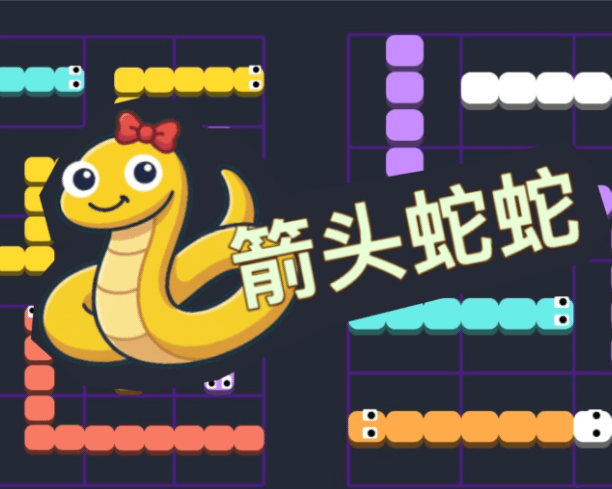
I admit I made this game to ride a trend. After shipping the first one, I believed I could turn a game in my head into something playable — with AI coding, of course; I should thank the models and IDEs here — so I looked at how mini games usually work in the Chinese market.
WeChat mini games have a trending list. The platform even suggests looking there for ideas. That is how I found the arrow games that were exploding then, and still are. The original does huge traffic and revenue worldwide. I searched on WeChat and more than five hundred similar titles came up. Homogeneous games are not reviewed very strictly here; plenty of people buy the same source, swap a skin — or don’t — and ship. I figured if I wanted to make something and maybe earn from it, I might as well try the hottest thing.
I did not buy any source. I built it from scratch with AI tools. The gameplay itself was not hard. Levels were. AI-generated levels kept breaking, mostly in the algorithm. The original probably has a careful generator. After a few days of tinkering I had something decent enough, but too much empty space; it would not fill a scene cleanly and needed hand fixes. The data was a huge JSON. Hand-editing that meant I needed an editor, so I built a web level editor for the game. It followed naturally. Later I saw that the source-code listings for this genre also bundled a web editor. In that sense we had arrived at the same place.
Because the algorithm was incomplete, every level needed watching and tweaking. I set myself a target of a hundred levels, and I finished it.
For the UI I deliberately split from the hit: a dark background, the idea of a snake, not the worn-out arrow.
After launch I posted it on Moments again. I was more confident than with the first game. The UI felt cleaner, more professional; the loop had already been proven. Maybe this one would work.
A relative I had not spoken to in years left a comment: “This is so fun!” That made me happy. Other friends played too. I believe most of them had never heard of the viral arrow game.
WeChat was still WeChat. Without paid promotion, organic traffic is scarce, especially in a crowded clone market.
Later it went to Douyin and iOS. Both were messy.
On Douyin I had the software copyright. Review rejected it at the last step: too many similar games. I tried twice and failed, and almost gave up. Weeks later I logged into the console with no new build and no new notes, and tried once more. It passed. I still do not understand their process. I hooked up the information feed after that. Results were weaker than Math Match, and still are. So a non-original game everyone has seen is, if anything, harder to push than something original that nobody has seen.
On iOS I spent a long time polishing and wiring Apple’s features. I had some hope for the platform. The first submission passed. The second update was caught and rejected for being too similar to existing titles. It has not gone back on the store since.
I also tried CrazyGames. After a few attempts, rejected.
I still think this game is better than the first in quality, maturity of play, and performance. On every platform the traffic was worse than Math Match. The main reason, I suspect, is that a follow-the-hit, non-original game is simply harder to make work. After that I dropped chasing explosions and went back to small inventions, or things that were fully mine. In that sense this game was a useful mistake.
One last point: I did build this independently, end to end. I did not look at anyone else’s code. I borrowed the genre, not the program. The logic is what I worked out, with AI helping.