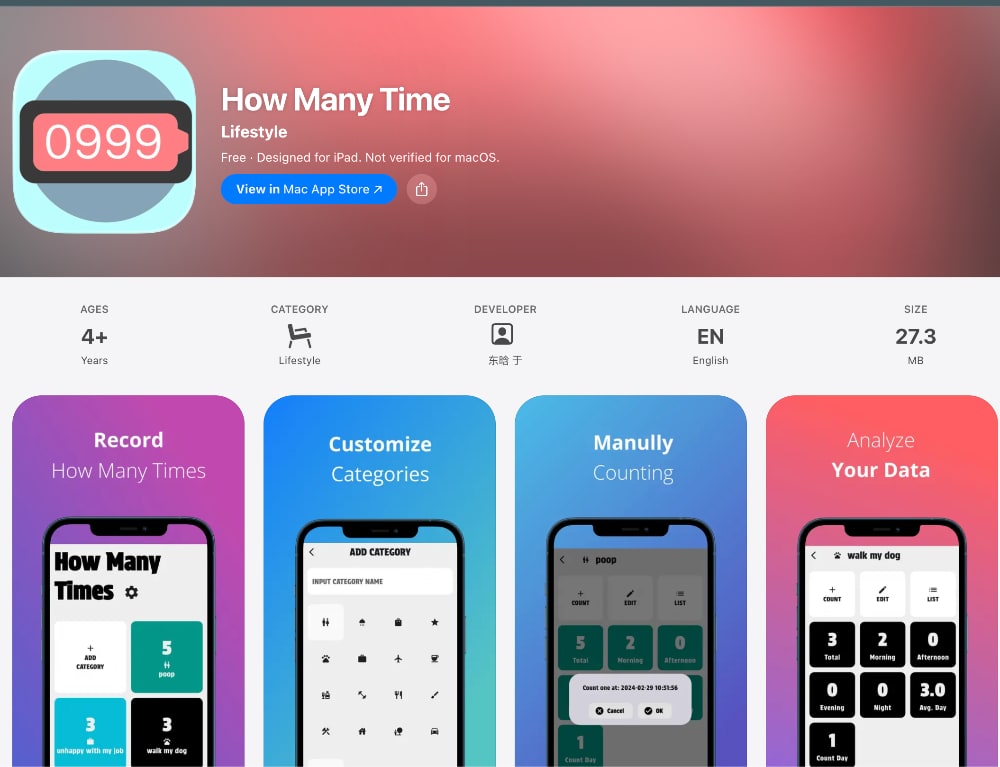
This is a project I shipped on the App Store in 2024. It started in Flutter; more recently I rebuilt it in Swift.
The app counts how many times you do things you define, each day. The idea came years ago, when I wanted to track how often I went to the bathroom and could not find an app that fit. Most of them care about what you plan to do, not what you did. I wanted a log: after a stretch of recording, you could see weekly and monthly averages, which days were high, which were low.
It launched in 2024 with maybe two-digit organic traffic. A year later I let the Apple Developer membership lapse, and it went offline.
In 2026 I bought the membership again, packaged two of my mini games for iOS, and opened this project back up while I was at it.
I found that the traffic I had worked to push onto the mini games was worse than How Many Times’ organic numbers — still tiny, single digits a week, but a little closer to a real keyword, a real need. So I thought: why not pick it up, rebuild it the Apple way, and learn Swift and Xcode while I was there.
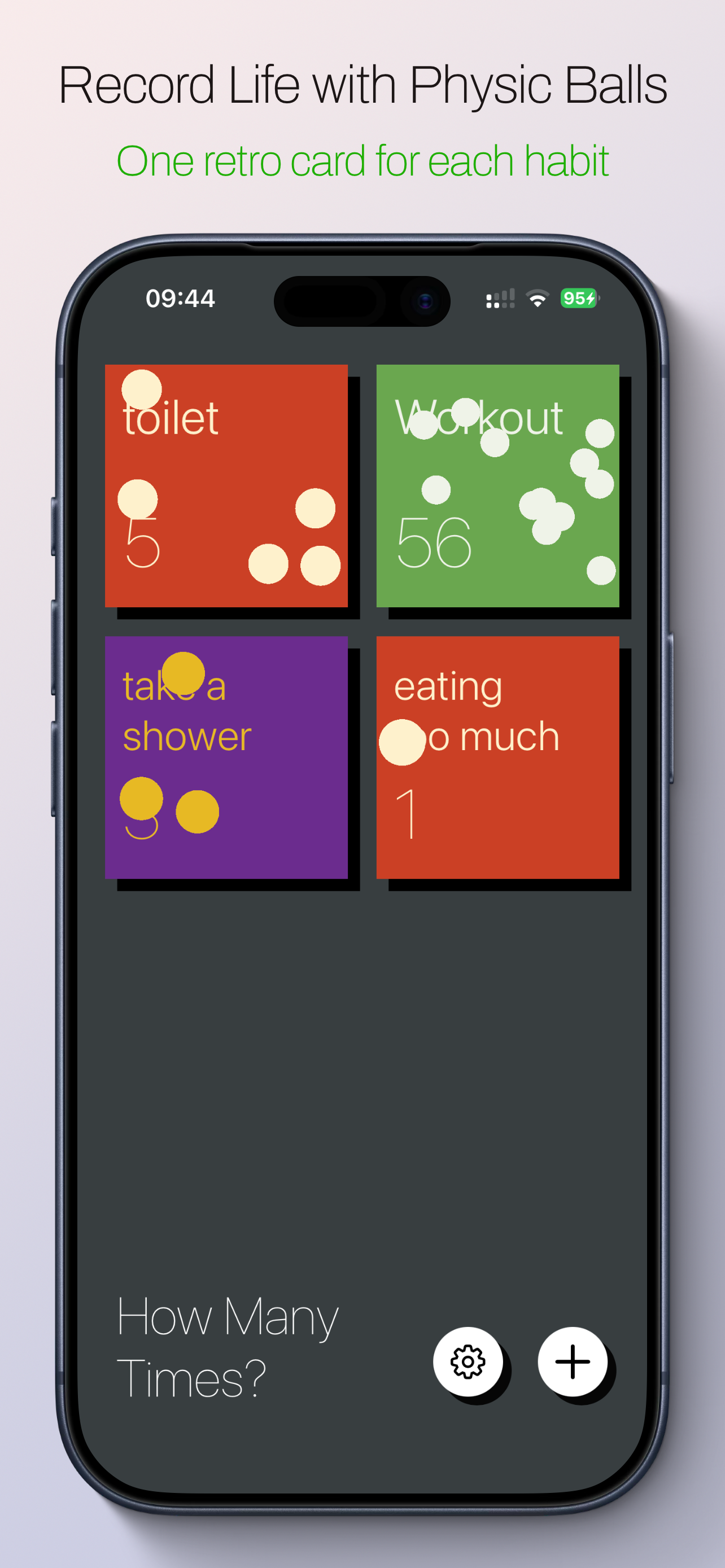
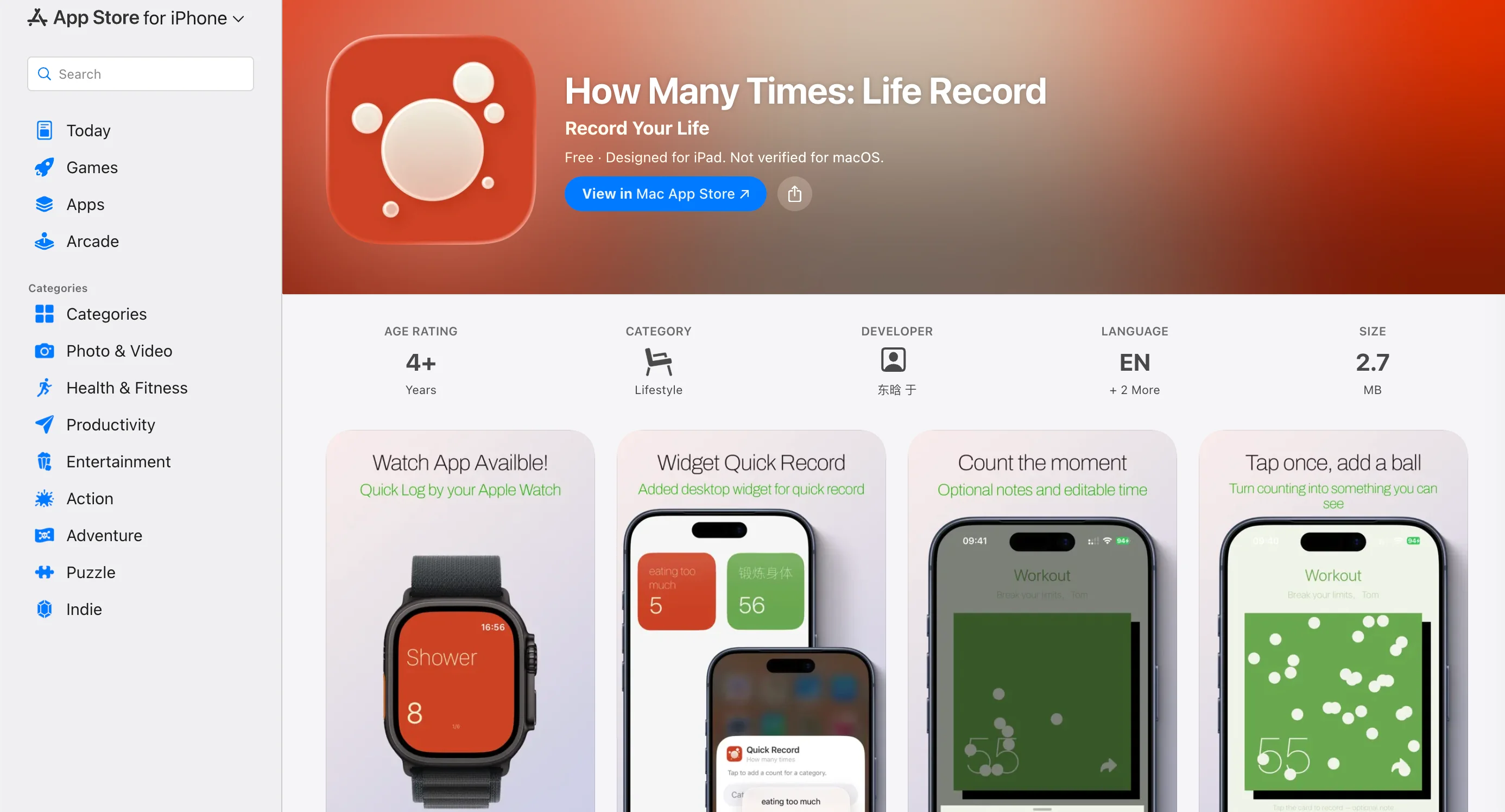
For the rewrite I used what I had learned from making games. I wanted the app to feel like play, so I turned it into a little physics box: each tap drops a ball that drifts around, with sound on walls and on placement, to make counting feel less dry.
On AI’s suggestion I also added Apple Watch logging and a home-screen widget. Traffic barely moved. It made me feel as if download numbers had little to do with quality.
The real problem, I think, is that it still needs a tap. I used it myself for a few weeks and then quit. If it could run on its own — like Screen Time, or step count — people might open it now and then. Manual counting is easy to miss, and hard to keep.
The project did get me comfortable with Swift and Xcode: physics, widgets, Apple Watch. That part was interesting.